Friday, 30 March 2012

Bill Bryson, Travel Writer and... historian?


Like many bibliophiles I'm a sucker for the discount table at book stores. So when I saw a deal in Chapters the other day I couldn't help but look a bit closer at what was on offer.

And what should I see but a book of history by Bill Bryson - a book that is about, well, everyday history. I missed it when it came out in 2010, called At Home: A Short History of Private Life. I've only read one of his travel books, but I did enjoy his A Short History of Nearly Everything, a popular science introduction to all kinds of basic science ideas that everyone ought to know. Now Bryson has turned his attention to our private lives, our home life. What kind of historian is he?

Well, at the risk of offending Australians everywhere (who are still smarting at the easy stereotypes in his In a Sunburned Country), I have to say that Bryson does quite well at making the past come to life. The premise of the book is that he takes his own English home, a country rectory built around 1850, and goes through it room by room, using each room to tell the history of the kinds of activities and people that would have been found within it. So we get food history in a chapter on the kitchen, and the history of servants life in a chapter on the scullery and larder, and so on.

Bryson is no original historian, doing extensive primary research. He is more anecdotal than comprehensive, as befits a travel writer, popping here and there through the distant land that is history. But he does have enough sense to treat the past as a truly foreign land, as something that is fascinating in its own right, and which deserves to be explained.

And, of course, he is very funny. He is great on the early cookbooks, especially the influential Mrs Beeton's The Book of Household Management. Mrs Beeton, he says, 'made clear that running a household was a grave and cheerless business.' Despite the fact that most of 900 pages in the book are devoted to giving recipes he suggest that she didn't 'go near her own kitchen if she could possibly help it.' A hint here comes 'when she suggests, for instance, boiling pasta for an hour and three quarters.' He quotes her on garlic ('offensive') on potatoes ('suspicious: a great many are narcotic') and on ice and cold beverages ('It is also necessary to abstain from them when persons are very warm, or immediately after taking violent exercise, as in some cases they have produced illnesses which have ended fatally.').

There is much more, all of it anecdotal and fascinating - plenty of old chestnuts but also some, to me, new information too. His bit on the export of Wenham Lake ice (near Boston) to Europe and around the world in the 1840s is fascinating. So too is the anecdote where he says that the Norwegians changed the name of a lake near Oslo to Wenham so as to 'tap into the lucrative market'.  

If he lingers in the houses of the well-to-do a little long, he doesn't neglect the reality of poverty and the homes of average folk. No academic historian would have the breezy confidence to attempt a book like this, full of holes and gaps and leaps of logic. But that makes it all the more interesting to read.


Tuesday, 27 March 2012

John Ibbitson on the 'Laurentian Consensus'


I have just read John Ibbitson's long essay on the fall of what he calls the 'Laurentian Consensus' (published online at the Literary Review of Canada site here). It is, essentially, an argument that the 2011 election mattered in a historically significant way - that it represents a shift in the political nature of the way the country is governed.

He seems good on the last five years and the current mood of the country, but his ideas about the Laurentian elite seem to simply echo the Conservative Party rhetoric on why one ought to vote Conservative. In other words, they pick up on a few facts and then shape them in such a way as to make those who oppose them part of a cultural elite of snobby, CBC and arts loving folk who don't buy enough double-doubles at Timmies. I noticed that he was also taking an uncharacteristically sceptical line on robo-call. Is he trying to cosy up to the Conservatives? Trying to win some favour so that those in the know will start talking to him?

He does wonder about the origins of the term Laurentian consensus. If he's looking for an answer, my guess is that he (or someone else) picked it up from the idea of the Laurentian thesis of Canadian history associated with, amongst others, Donald Creighton. Take a look at Carl Berger's classic book on the writing of Canadian history for a deeper explanation.

Monday, 26 March 2012

Eminent Acronyms: P B Waite on R B Bennett

In Search of R.B. Bennett


Roderick Benns at Fireside Publishing tells us (here) that P B Waite has a new biography coming out of R B Bennett (with McGill-Queen's UP). I had somehow missed this entirely.

Waite is a superb historian and a subtle, elegant writer. He must be of a rather fine vintage himself. I still remember getting my first office as a Masters student at Dalhousie University in the mid 90s. There were boxes on the floor, shoved to the sides of the room, seemingly forgotten and abandoned - certainly not cared for by anybody who was in the history department at the time.

I couldn't help but peek to see what they were and I found that many seemed to be old manuscripts of Waite's who had long since retired from Dal. It seemed a shame then, and does even more so now, to think of the boxes as being left untended.

Little did I know that the man was still there and would, many years later, come out with a new book. There can be a long, long life after 'retirement.'


Thursday, 22 March 2012

Christopher Moore's History News: Hatchet award nominee: Evans on Wilson on Adolf Hi...


Christopher Moore's History News: Hatchet award nominee: Evans on Wilson on Adolf Hi...: Richard Evans, the distinguished British historian of Germany, unloads on A.N. Wilson, the distinguished British man of letters, for his ne...

Reading Christopher Moore's take on Evans on Wilson on Hitler (bear with me...) makes me think of the Extraordinary Canadians series published by Penguin. The series is meant to get Canadians reading short, lively introductions to the lives of some, well, 'extraordinary' Canadians. If you've been in a bookstore in the last couple of years you can't have missed these things.

I can't quibble with the earnest wishes, but I do wonder about the execution.

Take M J Vassanji's brief bio of Mordecai Richler. Poor Vassanji. He publishes this dainty finger snack of a book just before Charlie Foran's massive and compulsively readable new biography of Richler comes out. Foran goes on - deservedly - to get nominated for and win a slew of awards. Even before I read Foran's book I knew there was something wrong with the Vassanji biogrpahy. There was just too much Vassanji, not enough Mordecai. And it was, to put it mildly, slight.

Sometimes the choice of biographers has been odd too. I haven't yet read Joseph Boyden's double (!!) biography of Louis Riel and Gabirel Dumont (all in barely more than 200 pages). I did hear him interviewed by Sheila Rogers and you can't not admire his earnest desire to give a more 'aboriginal' view of the two men - certainly in keeping with the times. But as for his knowledge of the history, that was something else altogether.


Of course I haven't read all of these books (including Foran's on Maurice Richard, which I did buy but haven't got to yet).

Are there good ones? Do our extraordinary Canadians have some extraordinary biographers to help them come to life?

Contextualizing Robo-Call: Look back, way back...

Where does ‘robo-call’ fit into the history of Canadian political scandal?

If it is true that Conservative party functionaries sought to alter election results in one or more ridings by discouraging some opposition supporters from voting, then this would make for a relatively new kind of historical scandal. Why do I say this?

Historically, political scandals in this country come in two flavours: flavour a) incompetence and flavour b) corruption

Questions of incompetence have usually dogged individuals as in the recent case of Maxime Bernier. When Bernier left official documents in the keeping of his girlfriend, who herself had links to the Hells Angels, critics complained that he couldn’t be trusted to do his job properly. This was a small scale version of what we have seen many times before: the tuna-gate scandal in 1985  when large quantities of tainted tuna were allowed to be put on sale with the Minister fully knowing of the dangers; the Munsinger affair of the early 1960s in which two Conservative cabinet ministers had relations with Gerda Munsinger, a German national who the RCMP believed might have had ties with the Communists. The issue was about the competent performance of one’s job – with a splash of sex to make it more titillating.

The second type of scandal involves corruption and these have usually been about money.

Perhaps the most outstanding example of this kind of scandal broke into the public eye in 1926 when it was revealed that the federal Customs Department, under the corrupt gaze of Liberal Minister, Jacques Bureau, had been colluding with smugglers to run liquor back and forth across the Canada. In other instances, the corruption has been tied to party financing. When John A Macdonald’s Conservatives accepted hundreds of thousands of dollars from Hugh Allan in the 1873 election, many were sceptical that the contributions were not about buying his way into heading up the consortium to build the new railway across Canada.

The robo-call scandal doesn’t neatly fit into either of these kinds of categories. If true, it is evidence of corruption, but not in the usual kind of way. No one is getting rich off of this – not directly. It isn’t about incompetence either.

Certainly we’ve seen plenty of other examples of corruption that were just as egregious. But, and here is where conservative party commentators are wrong, we haven’t seen this kind of corruption before – at least as a scandal that has gained national attention.

The robo-call affair actually hearkens back to a much older style of politics that we thought we were well done with. In the 19th century, before the secret-ballot, political parties engaged in all sorts of dirty tricks to influence the results on election day. Casting a ballot could be a rowdy, rough affair and the ability of political parties to buy alcohol for their friends, and to have toughs on hand at polling stations mattered. (It was one of the arguments against granting women the franchise.)

I know the Conservatives are resurrecting a bit of our past in returning the Royal to the Royal Navy. But do they really want to go back this far in time – to these kinds of elections? It is hardly an ideal for democracy in the 21st century. 


Wednesday, 21 March 2012

Mackenzie King did not smoke opium

William Lyon Mackenzie King, 1905
Mackenzie King, 1905
source: Library and Archives Canada, PA-027975

There's an interesting article in the online BC magazine The Tyee today by Ben Christopher (see it here)about the history of drug policy in Canada - and the emergence of what he calls Vancouver's war on drugs. Of course it starts with the famous Mackenzie King trip to Vancouver in the aftermath of the 1907 race riots. But it goes on to deal with some pretty interesting material. Well worth a look.

Friday, 16 March 2012

Paul Martin on History Education

I read in today's Globe that former prime minister Paul Martin is deriding the lack of attention to aboriginal peoples in history education in Canada today. (see story here)

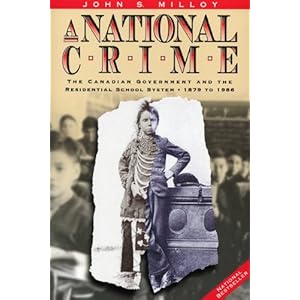
The article notes how the Truth and Reconciliation Commission (looking into the history of residential schooling) had made a similar point, arguing that the history of residential schools ought to be a part of the curriculum. I couldn't agree more.

The entire way our colonial history is taught in elementary and high school needs to be rethought unless and until it focuses on the way in which the founding of Canada was a part of a larger project of colonial expropriation of land and cultural whitewashing. This isn't the only story to be told about Canada's founding, but not including it is like having  maccaroni and cheese without the cheese; you can eat it, but something rather essential is missing.

Alas, though, I'm a bit put off by the suggestion of Martin's group that schools ought to be teaching more about aboriginal culture. Perhaps it's just me but I can't help but be skeptical about how this would actually work in practice. It's hard not to imagine this as leading to the same kinds of over-simplifications usually used to teach about 'pioneer' history now, but this time applied to aboriginal history. So instead of - or along with - stories of pioneer hardship and perseverence we could have stories on the harmony and environmental responsibility of aboriginal peoples.

Is this really what we would want - more simplifications and myth-making but in a more inclusive fashion?