Tuesday, 14 August 2012

Pedestrians and Drivers - near the beginning


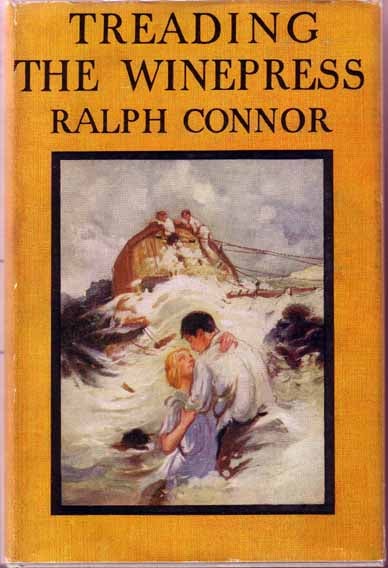
I came across this comment on the tensions between drivers and pedestrians in a Ralph Connor novel from 1928, Treading the Winepress [Perhaps I'll do another post on Connor himself as I've been writing about him lately and many are unlikely to recall one of Canada's most famous writers - and geniunely so - who is now forgotten].

Here is Connor as narrator on drivers and pedestrians:

'There is a natural antipathy between the motorist and the pedestrian. The antagonism is rooted in the whole social system of our day. To the pedestrian, the motorist is a plutocrat and parasite, a burden upon the toiling masses, and a menace to their very existence, more especially when they walk abroad to take the air. To the motorist, the pedestrian is a mere trap and snare, and, as well, a cumberer of the king's highway; a thing to be removed. Hence, the shrill honk of the motor horn, a signal which the unwary pedestrian must heed with the utmost despatch and without parley, fills him with impotent wrath. It is vain to argue with a motor car hurtling through space, and it is infinitely better to be alive, wrong, than dead, right.' (p. 21)

I love the way this captures so much of road culture before cars were commonplace and entirely accepted. There is still a sense here of motorcars as luxury goods, of oddities of the rich and pushy. It is almost, now, as if he is speaking of bicyclists and pedestrians on walking trails - the shared space, having to move away for the silly cyclists who come hurtling down the pathway, ringing their bells and daring those in their way not to get out of it.

Friday, 3 August 2012

An NDP/Liberal Prime Minister?

In all the talk over the last year of whether the Liberals and the NDP should or shouldn't merge into one party, I haven't heard anyone mention one curious incident from the past that bears something of a resemblance to the present scenario: the possibility that a CCF leader might take the helm of the Liberals.

It was widely rumoured in the 1940s that Mackenzie King wanted to swallow his CCF adversaries (as he had the Progressives in the 1920s) and that his widest mouthed attempt may have been an 'unofficial-official' query to then CCF leader M J Coldwell to see if he would be willing to be King's successor.


I need to get more details on the story but one second-hand account I have read suggested that Coldwell was approached by two people, likely the Winnipeg Free Press (and very Liberal) journalist Grant Dexter and a Liberal cabinet minister close to King (likely Brooke Claxton). Coldwell was asked to come into the goverment as a minister immediately (probably as Minister of Labour - the same way King had first come into cabinet, and we all know what King thought of 'coincidences'). Then, when King finally retired, Coldwell would replace him.

How true all of the details are I don't yet know but I am most convinced by former Conservative prime minister Arthur Meighen's analysis of the scenario. Meighen's response was:

'I have never had the least difficulty in analyzing King's purpose in having Coldwell approached. It was to use this process of flattery and reward to get him coralled and thereafter rendered helpless. He had not the least thought of having him as a successor.'

This sounds like the Mackenzie King I know. Swallow your enemies whole - all in the greater interest of the nation of course...

Thursday, 26 July 2012

All Hail the Governor General, Lord Dictator of Canada?

Some of you might have seen references to a 'public opinion' poll about Canadian attitudes towards the monarchy in Canada (including the Governor General and the Lietenant-Governors) put out by a group calling itself Your Canada, Your Constitution. (See here and here)

It's a seemingly well-intentioned group that is, nevertheless, spreading some pretty ludicrous ideas about the nature of parliamentary government.

The questions in the survey included:

Question 1
Under Canada's current Constitution, the British Monarch together with an appointed Governor General (Lieutenant Governors for the Provinces) have the following decision-making powers:

-  To approve or reject any law passed by our elected politicians;
-  To determine when elections are held;
-  To chose Canada's Prime Minister and the Premier of each province after an election, and;
-  To determine when Parliament and Provincial Legislatures are opened and closed.

To what extent do you agree or disagree with the British Monarch and Governor General and Lieutenant Governors having these decision-making powers?
-  Strongly agree
-  Agree
-  Disagree
-  Strongly disagree
-  [Do not read] Don't know/refused

Question 2
Do you think that these decision-making powers of the British Monarch and Governor General and Lieutenant Governors should be¦
-  Set out in clear rules that are enforced by the Supreme Court of Canada.
-  Given to a person in a new position who is elected by Canadians.
-  Both
-  Neither
- [Do not read] Don't know/refused


Alas, the fact that this questions entirely overstate the actual powers of the crown in Canada seems to either have been entirely missed by the organization - or deliberately suppressed.

But I'm not the best person to speak on this. Here are some details from a press release put out by Helen Forsey (part of which is also mentioned in the Katie O'Malley blog above)

SURVEY PRESENTS LUDICROUS CARICATURE OF CONSTITUTION: FORSEY

Ompah, Ontario – "Canada's ailing parliamentary democracy has just suffered another blow, in the form of this appalling survey," says Helen Forsey, daughter of the late Senator and constitutional expert Eugene Forsey. She is commenting on a recent poll by a new "educational charity", Your Canada, Your Constitution (YCYC) about the supposed powers of the Crown in our political system.

The survey began with a sweeping misrepresentation, and at no point touched base with reality. It stated, falsely, that our present Constitution gives four far-reaching and outrageously dictatorial "decision-making powers" to the "British monarch," the governor general, and the provincial lieutenant governors. Then it asked two thousand Canadians whether or not they liked this imaginary tyranny.

Naturally, most did not.

"Anyone who knows anything at all about our parliamentary system knows that the powers of the Crown are miniscule," says Forsey, whose recent book, Eugene Forsey, Canada's Maverick Sage, delves into these questions. "In a very few extremely exceptional circumstances, the 'reserve powers' of the governor general and the lieutenant governors can be important, but even then they are hedged around by restrictions and practical limits that make them subject always to the will of our elected representatives."

For example, contrary to the statements in the survey, the governor general has no power to reject a law passed by "our elected politicians" in Parliament. (The provincial lieutenant governors may, in rare cases, "reserve" a bill, but then it is up to the federal government – made up of elected politicians – to make the final decision. In practice, it is hard to imagine this kind of federal challenge to a provincial law.)

The survey's assertions about the other three royal "powers" are just as wrong-headed, says Forsey.

"This kind of pernicious misinformation plays straight into the hands of those in power who would love to keep us barking up non-existent trees. That way they can on ignoring, abusing and destroying the democratic rights and protections that our Constitution actually does provide – mechanisms of parliamentary democracy and constitutional monarchy that have evolved through centuries of popular struggle and citizen vigilance."

"Despite good intentions, YCYC is doing a massive disservice to Canadians by circulating this ludicrous caricature of our constitution. I fail to understand how Harris/Decima can have agreed to be a party to such a gross distortion of reality."
                                                                                                                                            
"We have real tyrannies to deal with these days," said Forsey, who, like her father, has a history of vigorous opposition to the abuse of power. "As citizens, we cannot afford to waste our energies on imaginary ones."

The facts about our system of government are set out in the Library of Parliament's booklet, How Canadians Govern Themselves, written by Senator Forsey and now in its eighth edition, in print and on-line: www. parl.gc.ca/About/Parliament/SenatorEugeneForsey/book/preface-e.html
Wednesday, 18 July 2012

The most interesting archive website ever?

Dr. Thomas Neill Cream

A few questions you'll find answered on the McGill University Archives website:

Did a McGill student accidentally kill Harry Houdini?

Did 'Jack the Ripper' attend McGill University?

Am I a descendent of James McGill?

These questions are all answered at the website (here) on the very short list of FAQs. It makes for quite a change from the usual list of questions archives staff they think they might have to answer (ie how much does it cost to make a photocopy?). But maybe they really were/are frequently asked!

Monday, 16 July 2012

Vancouver Holocaust Education Centre on Jewish wartime refugees

A fascinating story on the CBC the other night tells of a new exhibit at Vancouver's Holocaust Education Centre about a little known group of wartime Jewish refugees. For more details see here

You can listen to the CBC radio story about the exhibit  here

The first interview is very interesting but I must confess I was a little blown away by the second interview, of Rabbi Erwin Schild, who survived Dachau and is the author of The Very Narrow Bridge: A Memoir of an Uncertain Passage .

The interviewer asked him what he no doubt thought was a basic and obvious question, 'What was it like in Dachau?' How the hell do you even begin to answer something like that?! Perhaps the journalist is working on other seemingly reasonable questions like 'What was it like when they killed your parents?' or 'What was it like at residential schools?'

But to his credit, Schill didn't hesitate and began (oh where to begin?) to answer the question.

Thursday, 12 July 2012

Norman Bethune and the Canadian frontier


An amusing story in yesterday's Globe just got better.

Yesterday the Globe reported (here) on the oddity of the Conservative government funding the building of a historic centre devoted to the Canadian communist Norman Bethune. Bethune has, of course, been seen in China as a relatively significant figure, and it seems the Conservatives want to both cash in on tourist dollars and perhaps win favour with some in the Canadian Chinese community.

But today historian Larry Hannant writes in to offer something of a correction. While the journalist had talked about the abrupt break of Bethune's 'transition from comfortable Gravenhurst to wartime China' Hannant clarifies: 'In 1890, when Bethune was born, Gravenhurst was the frontier, a rough timber-milling town on the front lines of the historic assault on the massive Ontario forests. Bethune's capaity to rough it and innovate in harsh conditions was nurtured there - and in Blind River, Aylmer, Sault Ste Marie and several other northern Ontario towns he called home in his first two decades.'

My own favourite sort-of account of Bethune is the portrait that is said to be of Bethune in Hugh MacLennan's great novel, The Watch That Ends the Night.

Canada's Maverick Sage


An amusing anecdote from the archives about someone who refused to listen:

In a letter from Eugene Forsey to Arthur Meighen in 1949, Forsey tells Meighen about a visit he made in the midst of the 1945 election to the journalist Charles A Bowman. I'll let Forsey tell the story:

'In the 1945 election, Walter Mann (CCF Federal candidate) and I went to interview him [Bowman], in the hope of getting favourable publicity. Walter, who knew the old boy before, gave him a short outline of our views. When he'd finished, Bowman bleated at him: "It's such a pity the CCF doesn't propose to do anything about the banks." Walter replied, "Well, Mr. Bowman, as I've told you many times, the CCF proposes to nationalize the banks." "Yes. It's such a pity the CCF doesn't propose to do anything about the banks." Walter repeated what he had just said. "Yes. It's such a pity the CCF doesn't propose to do anything about the banks." After this had happened four or five times, Walter just looked at me and gave up.'

Forsey is, as I've said before, a delight.

Incidentally, for a longer and stronger dose, do look to his daughter, Helen Forsey's new book Eugene Forsey: Canada's Maverick Sage from Dundurn. See here